
Learning A Million Dreams chords is a great way to start playing one of the most inspiring songs from The Greatest Showman (2017).
Performed by Ziv Zaifman, Hugh Jackman, and Michelle Williams at different stages of the film, the song features a hopeful melody and uplifting message that make it popular with singers, guitarists, and piano players.
If you are a beginner or an experienced musician, you can learn to play it with regular practice and a steady rhythm. The chords depend on the arrangement and musical key, so it is important to choose a version that suits your instrument and skill level.
In this guide, you will explore beginner-friendly guitar and piano chords, simple strumming patterns, chord transitions, and practical tips for singing while playing.
You will also discover how to avoid common mistakes and find reliable sheet music to help you learn and perform this memorable song with confidence.
Key Takeaways
- “A Million Dreams” is a song from the musical film The Greatest Showman (2017).
- You can learn a simplified accompaniment on either guitar or piano.
- Chord progressions may vary between arrangements and transposed versions.
- Beginners should practice chord changes slowly before adding vocals.
- Licensed sheet music is useful when you need the original arrangement or exact chords.
1. About “A Million Dreams” From The Greatest Showman
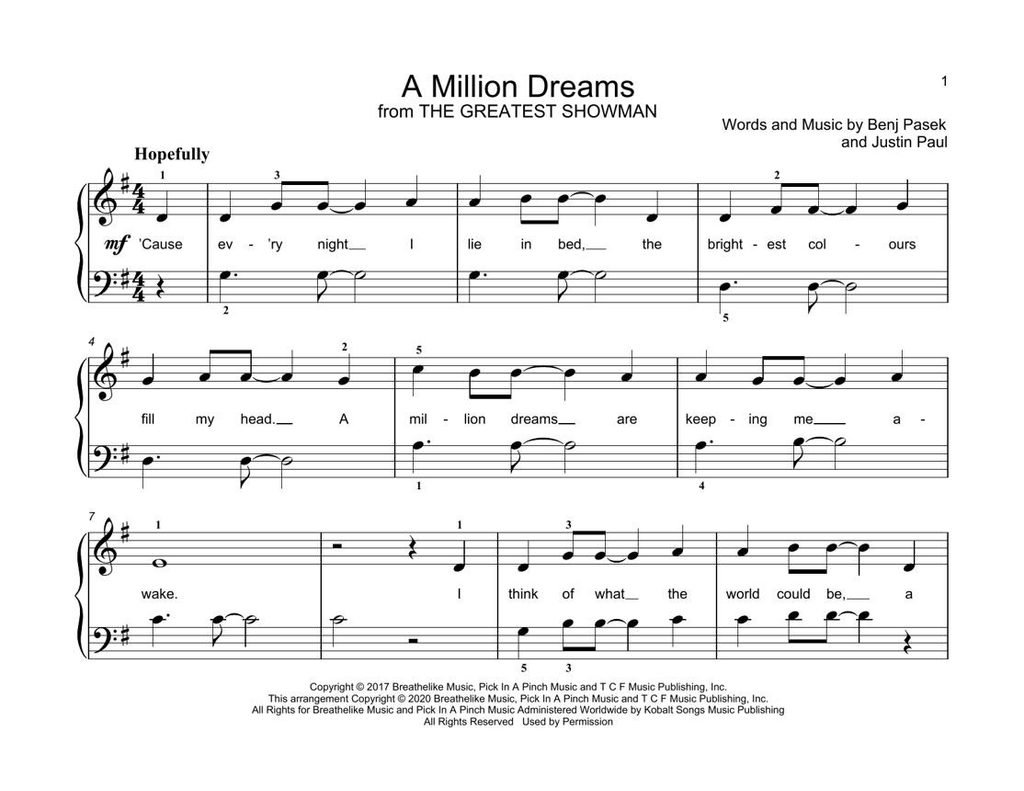

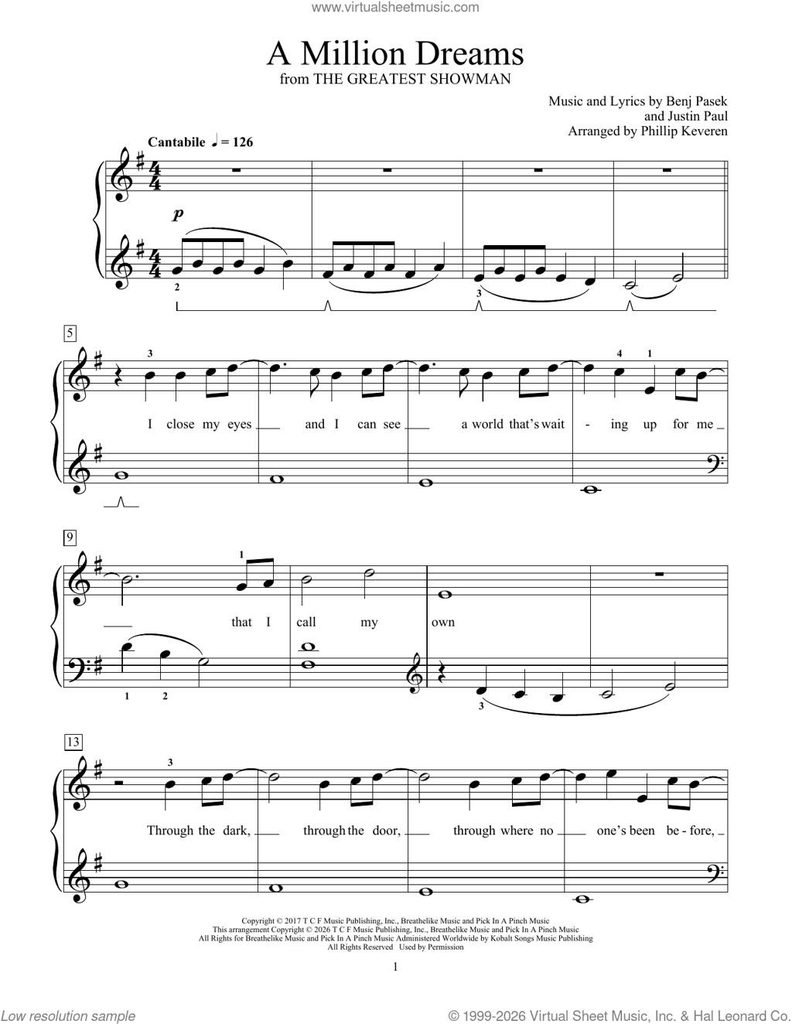
4
“A Million Dreams” is one of the best-known songs from The Greatest Showman. The music and lyrics were written by Benj Pasek and Justin Paul. The song helps express the main character’s hopes and imagination as he dreams of a different future.
The film features the song through performances by Ziv Zaifman, Hugh Jackman, and Michelle Williams. Its arrangement starts gently and develops into a fuller, more powerful sound. This makes it useful for learning how musical dynamics can shape an emotional performance.
Why is the song popular with beginners?
There are several reasons musicians enjoy learning this song:
- A memorable melody: Its flowing tune makes it rewarding to practice.
- Flexible arrangements: Piano, guitar, vocal, and simplified versions are available.
- Expressive playing: You can practice changes in volume and intensity.
- Group performance: The song works well for singers accompanied by a guitarist or pianist.
The original published key of the piano/vocal/guitar sheet music listed by Musicnotes is G major, with alternative keys available. However, individual arrangements may use a different key, so always check the version you are learning.
2. Understanding A Million Dreams Chords
Before learning the song, it helps to understand what a chord is and how chord charts work. A chord combines several notes that sound together, creating the harmonic foundation beneath a melody.
For guitarists, a chord chart usually shows the chord name and sometimes a diagram of where to place your fingers. Piano players use the same chord names but arrange the notes across their hands.
Common chord symbols explained
Here are some basic chord symbols you may see in beginner arrangements.
| Chord symbol | Meaning | Example notes |
| G | G major | G–B–D |
| C | C major | C–E–G |
| D | D major | D–F♯–A |
| Em | E minor | E–G–B |
| Am | A minor | A–C–E |
| Bm | B minor | B–D–F♯ |
These are common chords worth learning, not a verified, complete transcription of “A Million Dreams.” The chords required for your version depend on the arrangement and its key.
What do major and minor chords sound like?
Major chords often sound bright or settled, while minor chords can sound more reflective or tense. These are broad musical impressions rather than fixed rules; context and arrangement also affect how a chord feels.
In a song built around hope and imagination, changes between different chord qualities can help create emotional movement. Listen to the original recording while following your sheet music to hear how the harmony supports the melody.
3. A Million Dreams Guitar Chords for Beginners
If you want to play “A Million Dreams” on acoustic guitar, start by learning the chord shapes used in your chosen arrangement. Do not try to master the full song at once. Practice a short section until the changes feel comfortable, then move to the next section.
Start with these beginner guitar chords
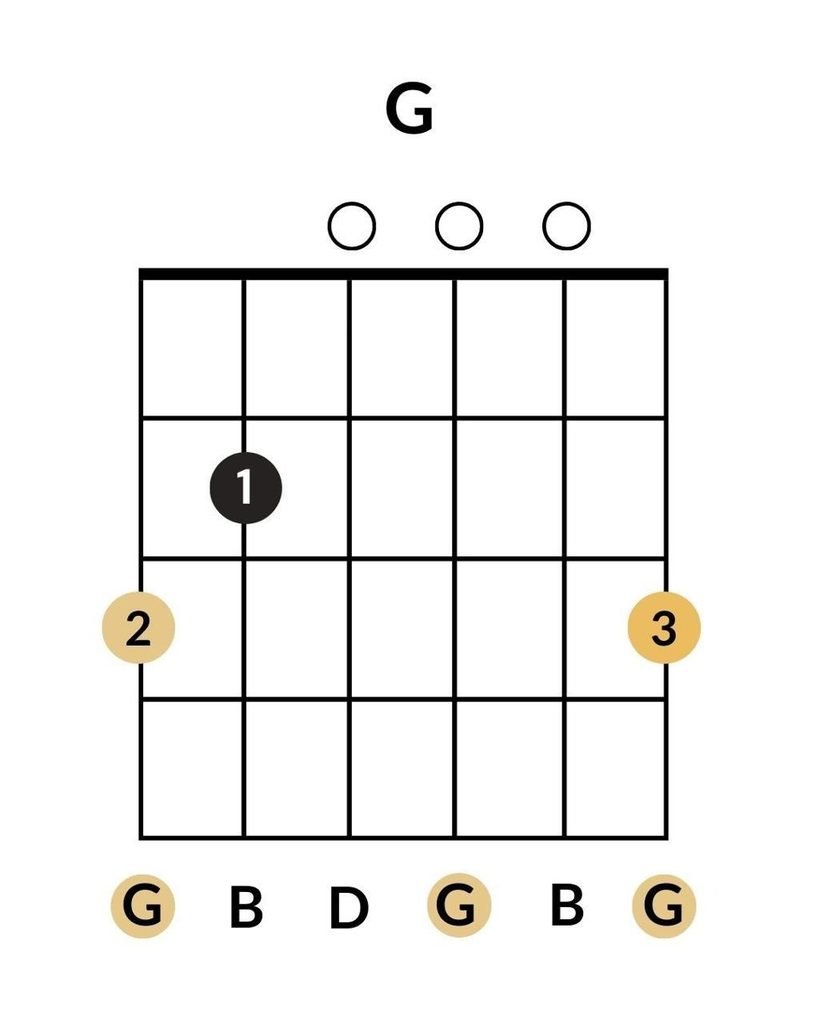
G major
A useful open chord for beginner practice. Place your fingers carefully and make sure the strings ring clearly.
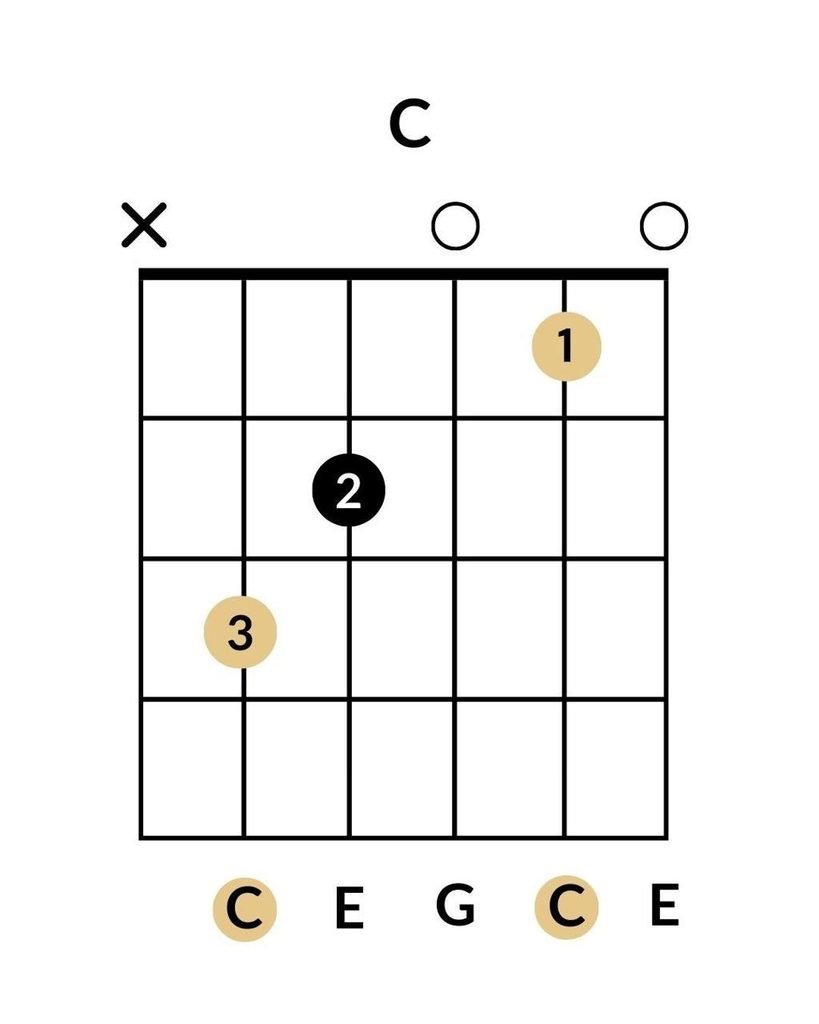
C major
Keep your fingers curved so they do not touch nearby strings. Move slowly from G to C until the transition becomes smooth.
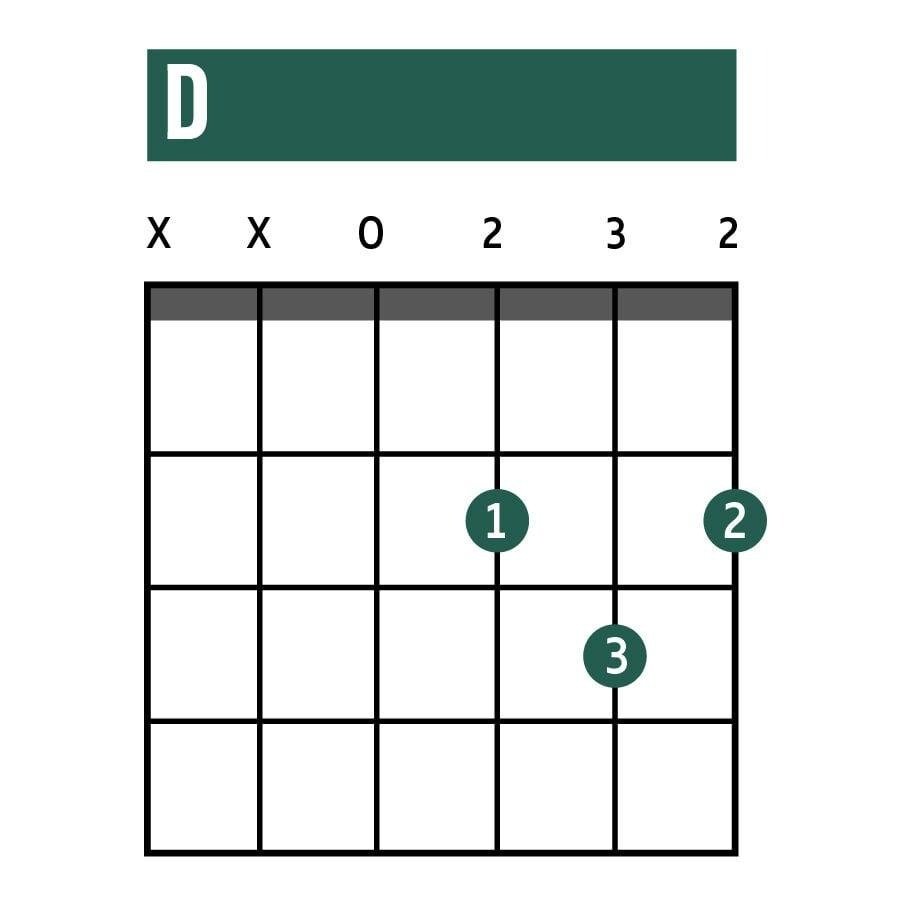
D major
This compact chord shape helps you practice controlled strumming and accurate string selection.
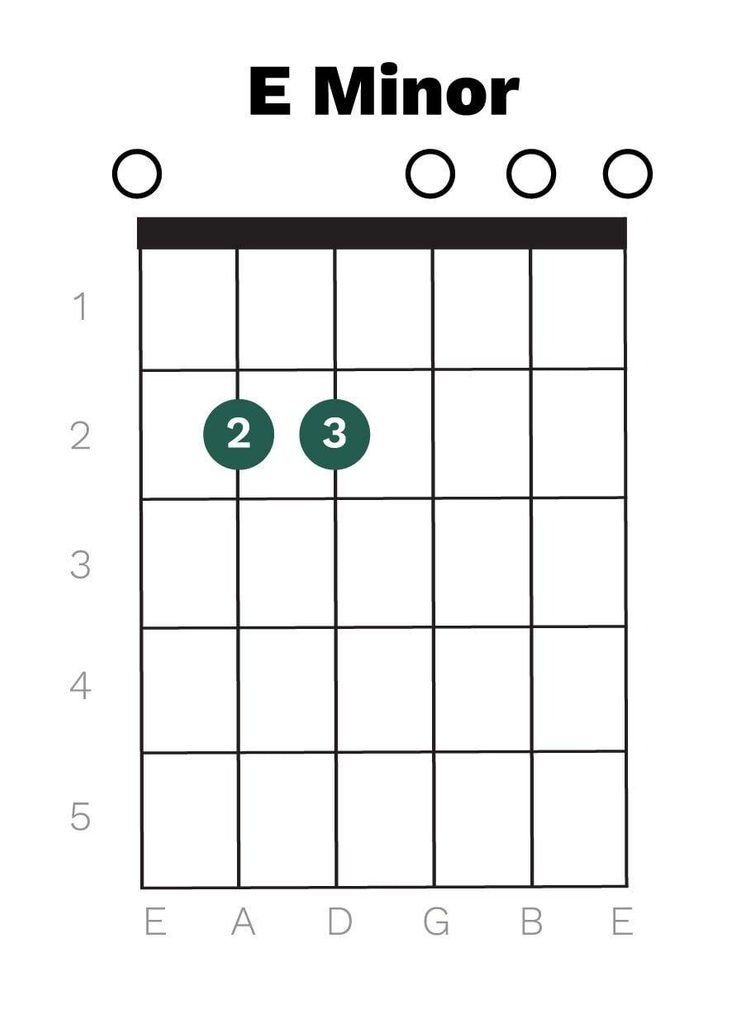
E minor
A simple two-finger chord that is useful for building confidence with open chords.
These chords make a helpful starting set for guitar practice. Confirm which ones appear in your selected arrangement before using them to accompany the complete song.
Practice chord changes before strumming
Try moving between G, C, D, and Em without playing a rhythm. Form the first chord, check each string, release your fingers, and move to the next shape.
At first, aim for clean notes rather than speed. Once you can change chords without long pauses, use a metronome at a slow tempo and gradually increase the speed.
An easy practice progression
You can use the following progression as a separate practice exercise, not as a confirmed transcription of the song:
G – D – Em – C
Play each chord for four steady beats. Repeat the sequence while counting aloud, then try changing chords every two beats.
This exercise helps develop the skills you need for many pop and musical-theater songs. When you are ready to play “A Million Dreams” itself, follow the chord sequence shown in your chosen sheet music.
4. A Million Dreams Piano Chords and Playing Tips
The piano is another excellent instrument for learning the song. You can begin with simple block chords and later add broken chords, melody notes, and changes in volume.
A published piano/vocal arrangement is available in G major, and piano versions vary in difficulty and scoring. Some focus on accompanying a singer, while others provide a fuller solo arrangement.
Learn the basic piano chord shapes
Start with the major and minor triads listed earlier. Play the three notes of each chord together with your right hand, using a comfortable hand position.
For a basic accompaniment, your left hand can play the root note while your right hand plays the full chord. For example, when practicing G major, play G in the left hand and G–B–D in the right hand.
Keep your wrists relaxed and avoid pressing the keys harder than necessary. Clear, even notes are more important than playing loudly.
Try block chords and broken chords
Block chords
Play all three notes together. This is the easiest way to learn the harmony and practice changing chords.
Broken chords
Play the notes one at a time instead of together. This creates a flowing sound that can suit a gentle accompaniment.
Dynamic changes
Start softly and gradually increase the volume where the arrangement builds. Follow the musical phrasing instead of playing every section at the same intensity.
How to coordinate both hands
Begin with one left-hand bass note per chord change. Add the right-hand chord after you can maintain a steady pulse.
Once the movement feels natural, try a simple repeating pattern in the right hand while the left hand plays the root note. Avoid adding too many notes at once. A clean, steady accompaniment will usually sound better than a complicated pattern played unevenly.
5. Strumming Patterns and Rhythm for A Million Dreams
A steady rhythm helps your guitar accompaniment sound natural. Because “A Million Dreams” builds from a gentle opening toward a fuller musical arrangement, it is worth learning to control your strumming rather than playing every chord with the same force.
An easy strumming pattern to practice
Start with this beginner pattern:
Down – Down – Up – Up – Down – Up
Count slowly and keep your strumming hand moving in a relaxed way. The pattern is a general practice exercise, not a verified transcription of the song’s original guitar part.
If the pattern feels difficult, begin with four downstrokes per measure. Once you can change chords without stopping, add the upstrokes and adjust the rhythm to match your chosen arrangement.
How to make your playing more expressive
Use these techniques to improve your performance:
- Start gently: Use light strums or soft piano notes during quieter passages.
- Build gradually: Increase the energy when the arrangement becomes fuller.
- Keep the beat steady: Avoid speeding up when a chord change feels difficult.
- Listen to the melody: Let the singer’s phrasing guide your timing.
- Practice with a recording: Start slowly and work toward the original performance tempo.
A published piano/vocal/guitar arrangement is marked at approximately 145 BPM, while another piano arrangement uses a different tempo marking.
This is a reminder that tempo depends on the edition and how the beat is counted. Follow the notation for your specific version instead of treating one number as universal.
6. How to Sing While Playing A Million Dreams
Many people learn this song because they want to sing while accompanying themselves on guitar or piano. Combining both skills can feel challenging at first because your hands must maintain the accompaniment while your voice follows a separate melody.
Learn the accompaniment first
Practice the chord changes without singing. When you can complete a section without losing the beat, speak the words of the vocal part in time with the music before attempting to sing them.
This approach helps you learn where the vocal phrases begin and end. It also makes it easier to spot chord changes that happen while you are singing.
Break the song into smaller sections
Use this practice sequence:
- Learn the opening and its chord changes.
- Practice the next vocal section separately.
- Work on the transition into the fuller part of the song.
- Join the sections together once each feels comfortable.
- Practice the complete arrangement while maintaining an even tempo.
You do not need to perform the entire song perfectly in one session. Short, focused practice sessions can help you build consistency without becoming frustrated.
Choose a key that suits your voice
The original published piano/vocal/guitar edition is in G major, but the song is available in alternative keys.
If the melody feels too high or too low, consider a transposed arrangement. Guitarists may also use a capo when the chord shapes and arrangement allow it. Piano players can transpose the notes to another key.
The best key is one that lets you sing comfortably while preserving the feel of the song.
7. Common Mistakes to Avoid When Learning the Chords
Beginners often assume that learning the chord names is enough to play a song well. In practice, clean transitions, timing, listening, and correct notes are just as important.
Changing chords too quickly
Trying to play at full speed before your fingers know the shapes can cause missed notes and pauses.
How to improve: Practice two chords at a time. Repeat the change until your fingers move with less effort, then add the next chord.
Using the wrong chord chart
Different arrangements may use different keys, chord voicings, or simplified accompaniment patterns. A chart in a different key may not match the recording you are following.
How to improve: Check the key and arrangement details before you start. Use a consistent chart or score rather than switching between versions in the middle of practice.
Strumming too hard
Playing every chord loudly can make a gentle song sound heavy and can hide mistakes in timing.
How to improve: Start with a light touch. Focus on even rhythm and increase the volume only when the music calls for it.
Ignoring chord quality
A major chord and a minor chord are not interchangeable. Even if two chord shapes feel similar, changing one note can affect the sound and mood.
How to improve: Learn the notes in each chord and check your fingering against a chord diagram or your music teacher’s guidance.
Trying to sing too soon
If you start singing before the accompaniment is secure, you may pause during chord changes or lose the beat.
How to improve: Practice the instrumental part until you can play it steadily. Add the vocal part in short sections and increase the difficulty over time.
8. Where to Find Reliable A Million Dreams Sheet Music
If you want the exact chords for the song, choose a source that identifies the arrangement, key, and instrumentation. This is especially important if you want to perform the song rather than simply practice similar chord shapes.
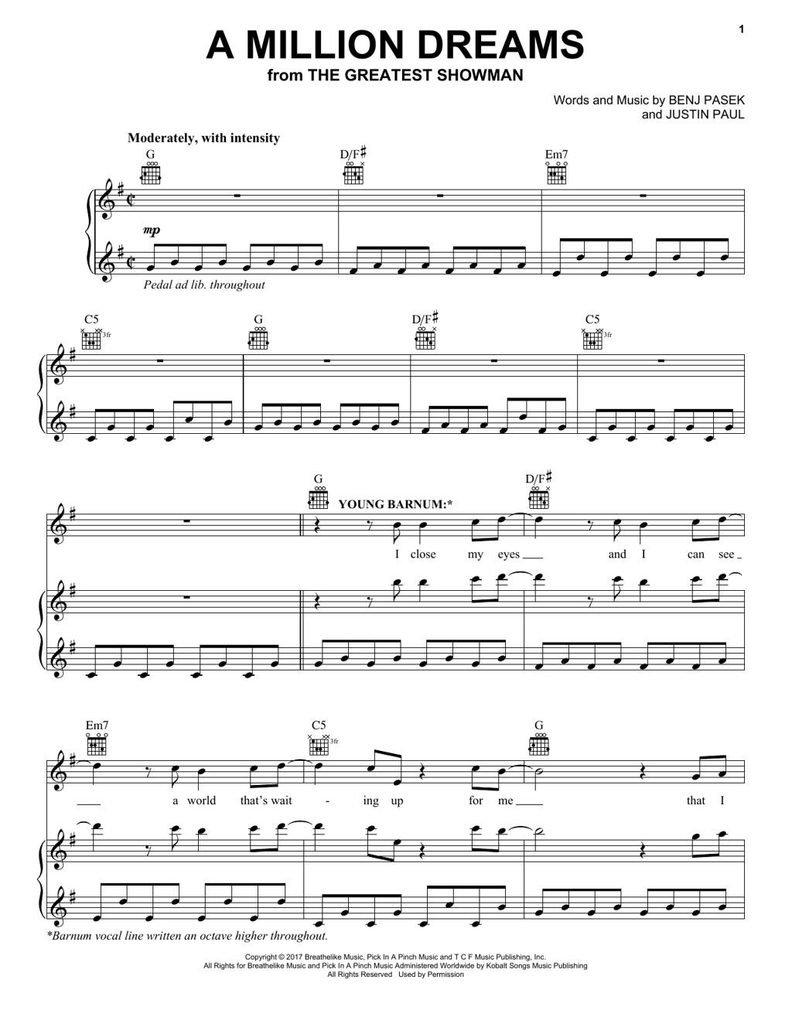
Musicnotes
Offers a published piano/vocal/guitar edition of “A Million Dreams,” including the original published key and transposable alternatives.
Best for comparing keys and choosing an arrangement.
View A Million Dreams sheet music
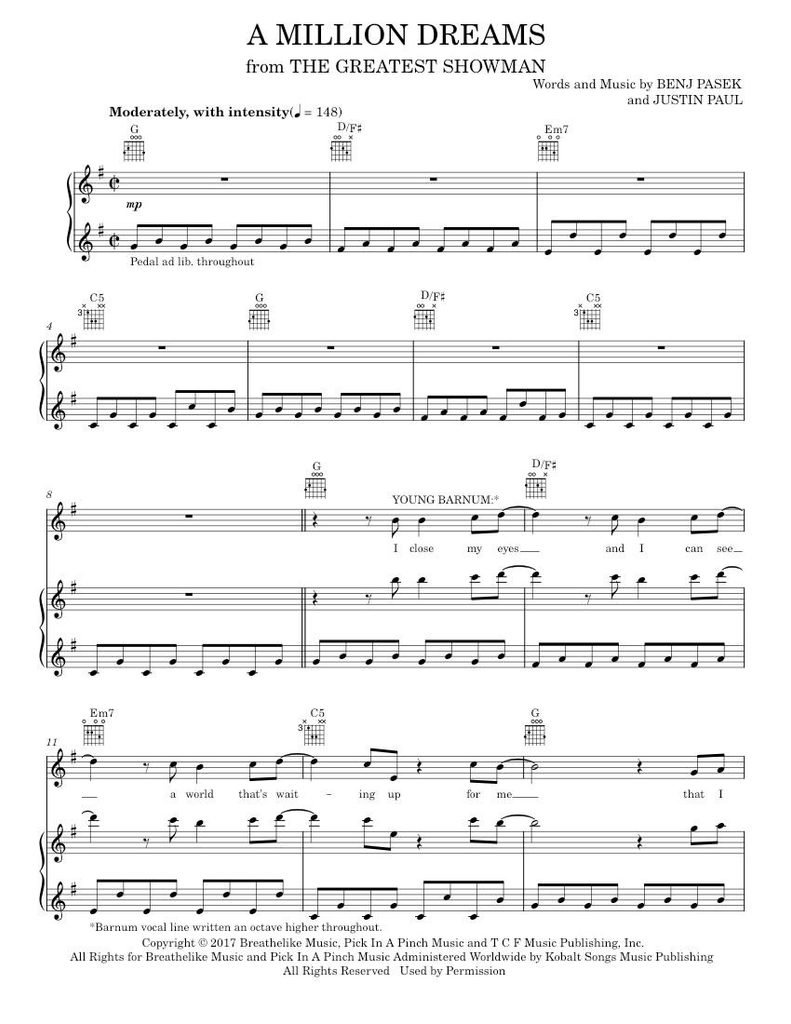
J.W. Pepper
Lists a piano/vocal/guitar edition and other arrangements, including an easy-guitar option.
Useful when comparing arrangements for different instruments.
What should you look for in a chord chart?
Before selecting a version, check the following details:
| Detail | Why it matters |
| Musical key | Helps you match the recording or your vocal range. |
| Instrumentation | Ensures the arrangement suits guitar, piano, or both. |
| Skill level | Helps you choose manageable chord shapes and rhythms. |
| Arrangement type | Separates simple accompaniment from a fuller solo score. |
| Publisher and permissions | Helps you find an authorized edition. |
For reliable information about the film and its music, you can also visit the official 20th Century Studios page for The Greatest Showman.
Conclusion:
Learning A Million Dreams chords is a rewarding way to improve your guitar or piano skills while enjoying a memorable song from The Greatest Showman.
If you are a beginner learning your first chord shapes or a more experienced musician working on expressive accompaniment, the key is to practice in small sections and build confidence gradually.
Start with basic chord shapes, develop a steady rhythm, and focus on smooth transitions before adding singing or more complex playing patterns. If you are using guitar, practice clean strumming and controlled chord changes.
If you play piano, begin with simple triads and gradually explore broken chords, bass notes, and dynamic changes.
Remember that chord charts can differ depending on the key and arrangement. For the most accurate version, choose reliable sheet music that matches your instrument and preferred difficulty level.
With regular practice, patience, and careful listening, you can develop a performance that captures the song’s hopeful and uplifting character.
FAQs:
What are the chords for A Million Dreams?
The chords depend on the version and key. The published piano/vocal/guitar arrangement is in G major, but alternative keys and simplified arrangements are available. Check your chosen score for the exact chord progression.
Is A Million Dreams easy to play on guitar?
It can be approachable for beginners, especially when you use a simplified arrangement. Start with the chord shapes and strumming pattern in your chosen version, then practice transitions slowly before playing along with the recording.
What key is A Million Dreams in?
The original published key of the piano/vocal/guitar sheet music listed by Musicnotes is G major. Other arrangements are available in different keys, so the key may vary depending on the version.
Can beginners play A Million Dreams on piano?
Yes. Beginners can start with basic triads, simple left-hand bass notes, and a steady rhythm. As their skills improve, they can add broken chords, fuller accompaniment patterns, and dynamic changes.
Where can I find A Million Dreams guitar chords and sheet music?
You can find authorized sheet music through retailers such as Musicnotes and J.W. Pepper. Compare the instrument, key, difficulty level, and arrangement before choosing the version you want to learn.
Read More Posts:
- Cyberpunk Sweet Dreams: Complete Walkthrough, Choices, and Tips
- Dreams Cozumel: Resort Guide, Amenities & Travel Tips
- Dreams Fleetwood Mac Chords, Key, and Tempo Explained in 2026

Michael Turner writes insightful articles for WorldofDreamsz.Com focusing on biblical meanings, dreams, and spiritual awareness. His goal is to inspire readers to explore deeper truths and strengthen their faith.