If you are searching for dreams fleetwood mac chords, you probably want to learn how to play one of the most recognizable songs in classic rock.
Released in 1977, “Dreams” was written by Stevie Nicks and featured on Fleetwood Mac’s iconic album Rumours. Its smooth groove, memorable melody, and repeating musical pattern make it an excellent song for beginner guitarists and experienced players alike.
The song is known for its relaxed rhythm and simple yet captivating arrangement. Many simplified guitar versions use F and G as the main repeating chords, while some arrangements include Fmaj7 and G6 for a richer sound.
Played in 4/4 time, the song offers a great opportunity to practice steady strumming, clean chord transitions, and subtle rhythmic accents.
If you are learning your first classic rock song or refining your guitar technique, understanding the chord progression and rhythm can help you capture the song’s distinctive feel.
With regular practice and careful listening, you can play “Dreams” with greater confidence and musical expression.
Key Takeaways
- Artist: Fleetwood Mac
- Songwriter: Stevie Nicks
- Album: Rumours (1977)
- Main chord pattern: F and G, with variations in fuller arrangements.
- Time signature: 4/4, with a moderate tempo around 120–122 BPM.
- Difficulty: Beginner-friendly at the basic chord level.
- Best practice tip: Focus on timing and consistent chord changes before adding more complex voicings.
About “Dreams” by Fleetwood Mac
Song background and musical context
“Dreams” is one of Fleetwood Mac’s best-known songs and a standout track from Rumours, the band’s 1977 album.
Stevie Nicks wrote the song, which appears as the album’s second track. Its restrained arrangement and memorable melody helped make it a lasting part of the band’s musical legacy.
Why the song is so popular with guitarists
Some classic rock songs require quick chord changes, complex fingerpicking, or long instrumental passages. “Dreams” offers a different challenge. Its repeating harmony gives players room to focus on rhythm, tone, and musical expression.
The song also demonstrates how a small number of chords can support a complete musical arrangement. The bass, drums, vocals, and instrumental textures each contribute to the finished sound. Guitarists can learn a great deal by studying how these elements work together.
What makes the sound distinctive?
The recording has a smooth, floating quality. The harmony repeats instead of moving through many different chord sequences, while the rhythm section maintains a steady pulse.
This creates a useful lesson for beginners: playing fewer notes with good timing can sound more musical than playing many notes without control.
What Chords Are Used in “Dreams”?
The most familiar simplified guitar arrangements use F and G as the main repeating chords. Some arrangements add richer chord shapes, including Fmaj7 and G6, to bring out more of the recording’s color. An Am chord may also appear in the instrumental break.
Main chords to learn
| Chord | Role in learning the song | Difficulty for beginners |
| F | Main repeating harmony | Moderate, depending on fingering |
| G | Main repeating harmony | Easy to moderate |
| Fmaj7 | Softer, more colorful F variation | Easy in some open positions |
| G6 | Adds a smooth, extended sound | Moderate |
| Am | Useful for the instrumental variation | Easy |
These are practical learning options, not a complete transcription of the recording. Exact chord names and voicings can vary across published arrangements.
Start with F and G
If you are new to guitar, begin by learning to move between F and G without stopping. Play each chord slowly, checking that every intended string rings clearly.
Don’t worry about matching every detail of the original recording at first. Build a steady pulse, listen carefully, and make each chord change cleanly before increasing the tempo.
Explore Fmaj7 and G6
Once the basic shapes feel comfortable, experiment with Fmaj7 and G6. These extended chords add notes that change the texture without making the music sound dramatically different.
The goal is not simply to learn more chord names. It is to hear how a small change in a chord can affect the mood and feel of a repeating progression.
What Key Is “Dreams” In?
The key of “Dreams” is a surprisingly interesting subject. Some music-analysis resources describe it in A minor, while other explanations emphasize its relationship to C major or analyze its repeating F–G harmony from a different tonal perspective.
Why sources may disagree
A song’s key is not always easy to identify from its chords alone. In “Dreams,” the harmony repeats between two main chords for much of the song. That pattern does not provide the strong, familiar resolution that would make the tonal center obvious to every listener.
The melody, bass line, note emphasis, and the way a listener hears musical tension can all affect the analysis.
For practical purposes, guitarists should distinguish between the key assigned by a particular arrangement and the chord shapes used to play it. A tutorial may use a transposed version or a different voicing while still teaching the recognizable song.
Does the key matter for beginners?
Yes, but it should not prevent you from getting started. If you want to play along with the original recording, use a reliable arrangement that specifies the intended key and tuning.
If you mainly want to practice the rhythm or sing comfortably, a transposed version may be more suitable. Just remember that moving a chord shape to a different position does not always preserve the original recording’s pitch.
How to Play the Chords on Guitar
Learning the chord shapes is only the first step. You also need to make the transitions smooth enough that the repeating pattern feels continuous.
Practice the F chord.
The F chord can be difficult for beginners when it is played as a full barre chord. Pressing several strings with one finger requires hand strength and accurate positioning.
An easier F variation can help you start. Use a beginner chord chart to select a shape that suits your skill level, then check each string individually. If a note sounds muted, adjust your finger position rather than pressing harder without a plan.
Practice the G chord.
The open G chord is a common beginner shape. Keep your fingertips close to the frets without placing them directly on top of the metal bars.
After forming the chord, strum slowly and listen for buzzing or muted strings. Repeat until you can form G without looking at every finger.
Make the chord changes smoother.
Try this short exercise:
- Form the F chord and strum once.
- Move to G without rushing.
- Return to F.
- Repeat the pattern for two minutes.
- Gradually increase your speed while keeping the sound clear.
The aim is to reduce the pause between chords. You do not need to strum continuously while learning; clean changes are more useful than fast, messy ones.
Add richer chord shapes later.
When F and G feel natural, introduce Fmaj7 and G6 if they are part of your chosen arrangement. Compare how each shape sounds and notice which notes change.
This is a simple way to begin understanding chord voicings, which are different ways to arrange the notes within the same or a related chord.
Strumming Pattern and Rhythm Tips
A steady rhythm is one of the most important parts of learning “Dreams.” Even if you know the chords, the song may not sound right if your strumming is too heavy, too fast, or uneven.
Understanding the 4/4 time signature
In 4/4 time, each measure contains four beats. You can count them as “one, two, three, four” while keeping your hand moving at a comfortable pace.
The original recording has a relaxed pulse, with a tempo commonly estimated at around 120–122 beats per minute.
You can begin more slowly and build up to that speed as your coordination improves.
Try a beginner strumming exercise.
Instead of trying to copy every detail of the recording immediately, begin with four gentle downstrokes per measure.
| Count | Practice action |
| 1 | Play a soft downstroke |
| 2 | Play another downstroke |
| 3 | Play a third downstroke |
| 4 | Play a final downstroke |
Keep your wrist relaxed. Avoid striking every string with the same force, and listen for a consistent rhythm.
Once you can maintain the beat, experiment with light upstrokes between the main beats. One common beginner exercise is a down-down-up-up-down-up pattern, but treat this as a practice option rather than a definitive transcription of the original guitar part.
Why dynamics matter
Dynamics refer to changes in volume and intensity. A gentle strum can support the song’s relaxed mood, while an aggressive attack may make the arrangement feel heavier than intended.
Try recording yourself playing the same progression twice: once with strong strums and once with a lighter touch. Listen to the difference. You may find that controlled, softer playing captures the song’s character more effectively.
How to Play “Dreams” on Piano, Ukulele, and Bass
The song’s repeating harmony makes it useful for musicians who play different instruments. You can work on the same basic musical idea while adapting the fingering and technique to your instrument.

Guitar
Start with F and G, then explore Fmaj7 and G6. Use a simplified F shape if a full barre chord is uncomfortable. Focus on steady strumming and smooth transitions.
Piano
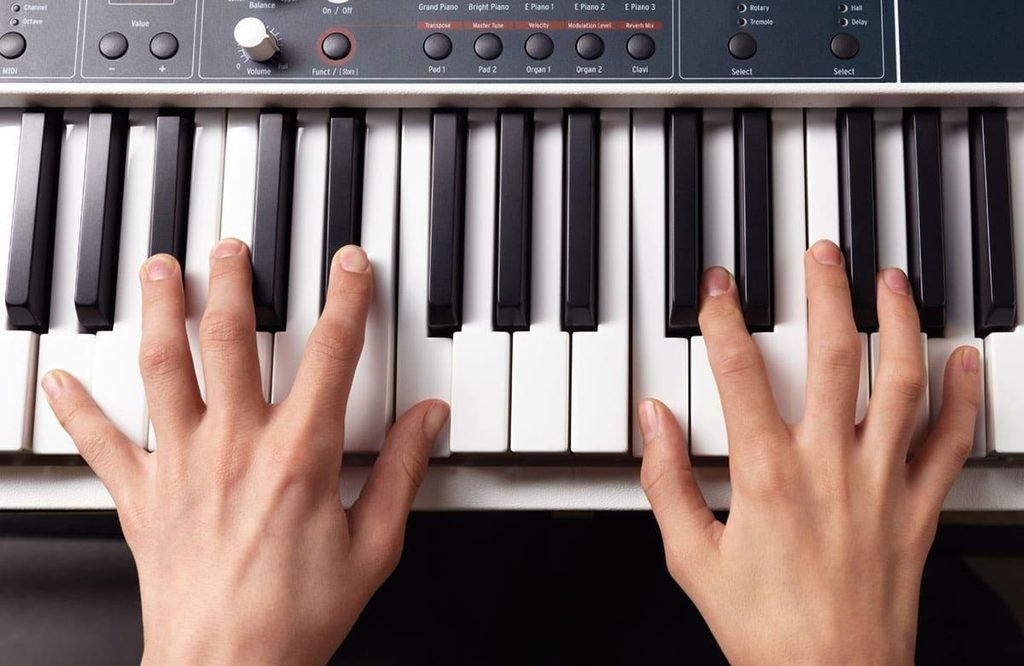
Play the chord notes together with your right hand while using the left hand for bass notes. Start with simple triads, then experiment with added notes to create fuller voicings.

Ukulele
Find ukulele chord shapes that match the harmony in your selected arrangement. Keep the strumming light and even, and check that your version is in the right key if you want to play along with the recording.

Bass guitar
Practice keeping a steady pulse and emphasizing the root notes of the changing chords. Listen to how the bass supports the drums and gives the arrangement its forward movement.
Should you learn the original arrangement or an easy version?
Your choice depends on your goal. A simplified version is useful when you want to sing along or build confidence with basic chords. A more detailed arrangement is better when you want to reproduce the original recording’s chord colors and instrumental parts.
Neither approach is inherently better. Start with the version you can play consistently, then add complexity when you are ready.
Common Mistakes When Learning the Song
A small number of recurring problems can make “Dreams” sound less natural, even when the chord shapes are correct.
Changing chords too quickly
Beginners sometimes rush the transition because they want to keep up with the recording. This can cause buzzing, missed notes, and uneven timing.
How to improve: Slow down until you can change chords without losing the beat. Use a metronome if necessary, and increase the speed in small steps.
Strumming too hard
Strong, constant strumming can overwhelm the song’s relaxed feel.
How to improve: Keep your wrist loose and use less force. Practice playing quietly without losing the rhythm.
Ignoring the bass and drums
The guitar chords are only one part of the original recording. The bass and drums contribute much of the song’s pulse and character.
How to improve: Listen to the recording with your attention focused on one instrument at a time. Notice how the rhythm section supports the repeating harmony rather than competing with it.
Assuming every chord chart is identical
Online tutorials may use different keys, chord voicings, or simplified arrangements. Some charts also label the tonal center differently.
How to improve: Choose one reliable tutorial and follow it consistently. Check its tuning, key, and chord shapes before combining it with other resources.
Trying to master everything in one session
Learning chords, rhythm, song structure, and singing at the same time can be frustrating.
How to improve: Divide your practice into small goals. Work on chord changes first, then strumming, and finally playing along with the recording.
Best Ways to Learn and Practice “Dreams”
A structured practice routine can help you make steady progress without spending hours repeating the same mistakes.
A simple 20-minute practice plan
Minutes 1–5: Chord shapes
Practice F and G separately. Check finger placement and make sure the strings ring clearly.
Minutes 6–10: Chord transitions
Alternate between the main chords slowly. Keep your movements small and relaxed.
Minutes 11–15: Rhythm
Use a metronome or count four beats per measure. Work on consistent volume and timing.
Minutes 16–20: Play along
Use a legitimate recording or licensed tutorial. Listen for changes in the arrangement and try to stay in time.
Use reliable learning resources.
Video lessons can help you see where fingers go and hear how the rhythm should feel. A detailed guitar lesson is especially useful if you struggle with the F chord or want to learn the instrumental variation.
For music theory, you can also explore Hooktheory’s analysis of the song to learn about its harmonic structure and why its key can be interpreted in different ways.
Conclusion:
Learning dreams fleetwood mac chords is a rewarding way to explore one of the defining songs of classic rock. Its repeating harmony makes it accessible to beginners, while its subtle chord colors, relaxed rhythm, and carefully balanced arrangement offer plenty of detail for more experienced musicians.
Start with the main F and G chord shapes, practice clean transitions, and work on maintaining a steady beat. Once the basic pattern feels comfortable, explore richer voicings such as Fmaj7 and G6, and listen closely to the bass and drums to understand how they support the song’s groove.
Remember that online chord charts may differ in their arrangement, voicings, and interpretation of the key. Choose a consistent learning resource and focus on playing musically rather than trying to master every detail at once.
With regular practice, patience, and careful listening, you can build the skills needed to play “Dreams” with greater confidence and appreciate why its seemingly simple musical structure remains so memorable.
FAQs:
What are the chords to “Dreams” by Fleetwood Mac?
Many simplified guitar arrangements use F and G as the main repeating chords. Fuller arrangements may include Fmaj7, G6, and Am. The exact chord selection depends on the arrangement you follow.
Is “Dreams” by Fleetwood Mac easy to play on guitar?
Yes, the basic chord pattern is approachable for many beginners. The F chord may require extra practice, but a simplified fingering can help you get started. Consistent timing is just as important as learning the chord shapes.
What key is Fleetwood Mac’s “Dreams” in?
Music resources differ in how they analyze the song’s tonal center. A minor is a common interpretation, while some analyses explain the harmony through its relationship to C major. The repeating F–G pattern contributes to this debate.
What is the tempo of “Dreams”?
The song is commonly analyzed at approximately 120–122 beats per minute in 4/4 time. Beginners can start at a slower speed and gradually increase the tempo while keeping their chord changes clean.
Can beginners play “Dreams” without a capo?
Yes. Many simplified arrangements use open-position chord shapes without a capo. However, check the key and fingering specified by your chosen tutorial, because different arrangements may use different positions or transpositions.
Read More Posts:
- Dreams Fleetwood Mac Lyrics: Full Breakdown & Analysis
- You Make My Dreams Come True Lyrics & Song Meaning
- In Your Dreams Cast: Full Voice Cast & Characters

Olivia Harper is a dedicated content creator at WorldofDreamsz.Com sharing powerful insights about dreams, prayers, and biblical meanings. Her writing helps readers discover hidden messages and find direction in their spiritual journey.