A sweet dreams GIF is a short animated image used to wish someone a good night or pleasant sleep in a fun, warm, or personal way.
Unlike a plain “good night” text, a GIF can add emotion through moving stars, sleepy characters, cozy beds, teddy bears, hearts, moonlit scenes, or playful animations.
People often search for sweet dreams GIFs to send to a partner, friend, family member, or someone special before bedtime. Popular styles include cute, romantic, funny, peaceful, and simple good-night GIFs.
These animations are commonly shared through messaging apps, social media, and GIF platforms such as GIPHY and Tenor. The right GIF depends on the person and the mood you want to create.
A romantic animation may suit a partner, while a cute or funny one may work better for a friend. In simple terms, a sweet dreams GIF is an easy visual way to say “good night” while making the message feel more thoughtful and memorable.
Key Takeaways
- A sweet dreams GIF is usually a visual way to say good night or sleep well.
- Different GIF styles can communicate romance, friendship, humor, affection, or calm.
- GIPHY and Tenor are two common places to search for good-night GIFs.
- Choose the animation based on your relationship with the recipient.
- Check the source and usage rights when using a GIF for public or commercial content.
- A short message can make a GIF feel more personal.
- GIFs are animated image files, not videos in the traditional sense.
- The best GIF is usually the one that matches the recipient’s personality.
What Is a Sweet Dreams GIF?
A sweet dreams GIF is an animated image designed around the idea of wishing someone a peaceful night or pleasant dreams.
The word GIF stands for Graphics Interchange Format. The format was introduced by CompuServe in 1987. The later GIF89a specification added features that supported animation, including frame timing and related controls.
Today, people often use GIFs as a form of visual communication. Instead of typing a long explanation, a person can send a short animation that expresses a feeling instantly.
A sweet dreams GIF may include:
- “Sweet Dreams”
- “Good Night”
- “Sleep Well”
- “Good Night, My Love”
- “Have Beautiful Dreams”
- “Night Night”
- “Sleep Tight”
- “Sweet Dreams, Friend”
- “Goodnight” with hearts or stars
The animation itself can be simple. It might show a character waving good night, a moon shining over a landscape, a person getting into bed, or stars twinkling in the sky.
The important part is not technical complexity. It is the emotion the GIF communicates.
Why Do People Send Sweet Dreams GIFs?
Bedtime messages are often emotional because they mark the end of a person’s day. A GIF adds a visual layer to that moment.
For example, sending “Good night” is direct and neutral. Adding a gentle animation of a moon and stars can make the message feel warmer without requiring a long paragraph.
A GIF can also help match the tone of a relationship.
A romantic partner may appreciate a heart-filled animation. A close friend might prefer something funny. A child may enjoy a cute animal or cartoon character.
The same words can therefore feel completely different depending on the animation surrounding them.
Types of Sweet Dreams GIFs and What They Communicate
Not every sweet dreams GIF sends the same message. The visual style matters.
Cute Sweet Dreams GIFs
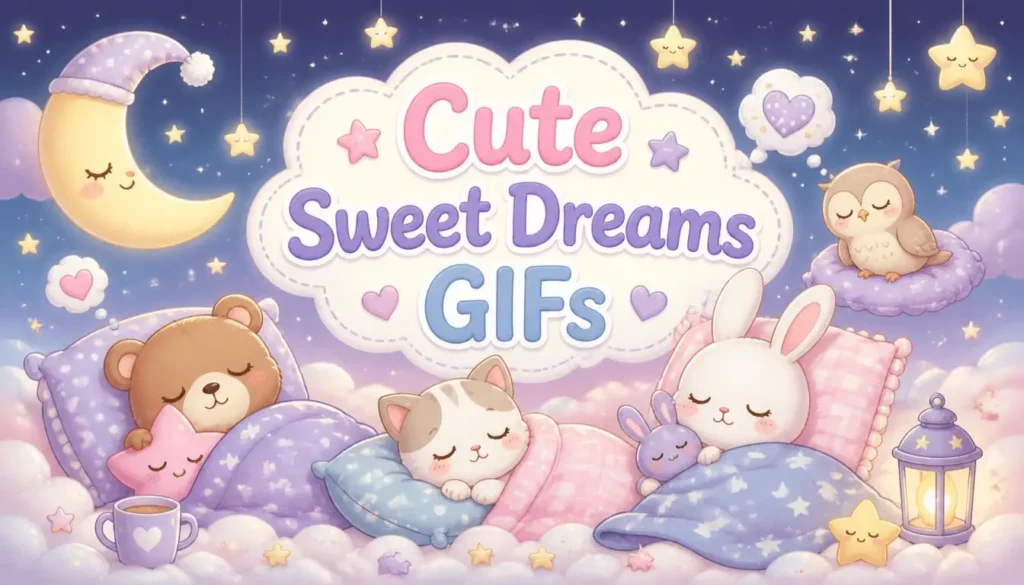
Cute GIFs are among the easiest choices for friends, family members, children, and casual conversations.
Common themes include:
- Puppies
- Kittens
- Teddy bears
- Cartoon characters
- Sleepy animals
- Soft stars
- Clouds and moons
- Cozy bedrooms
A cute GIF usually feels friendly rather than deeply romantic.
For example:
“Good night! Sweet dreams”
Paired with a sleepy puppy can feel affectionate without creating romantic confusion.
Romantic Sweet Dreams GIFs
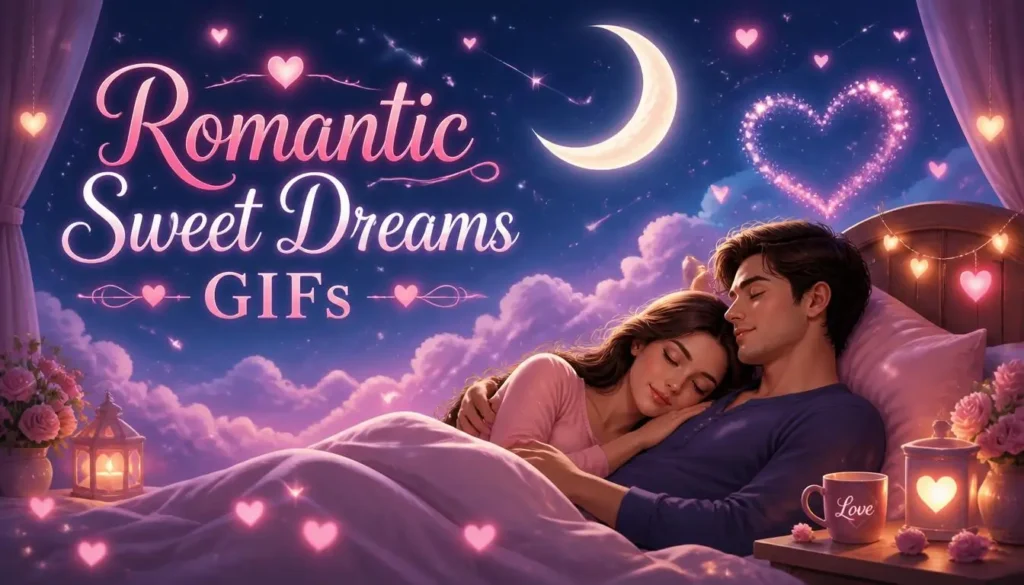
Romantic GIFs usually include hearts, kisses, couples, roses, glowing stars, or phrases such as “Good night, my love.”
These are better suited to:
- Spouses
- Romantic partners
- Someone you are dating
- A person with whom you already have a romantic relationship
Context matters. Sending an intensely romantic GIF to a coworker or casual acquaintance could create an awkward impression.
Funny Sweet Dreams GIFs
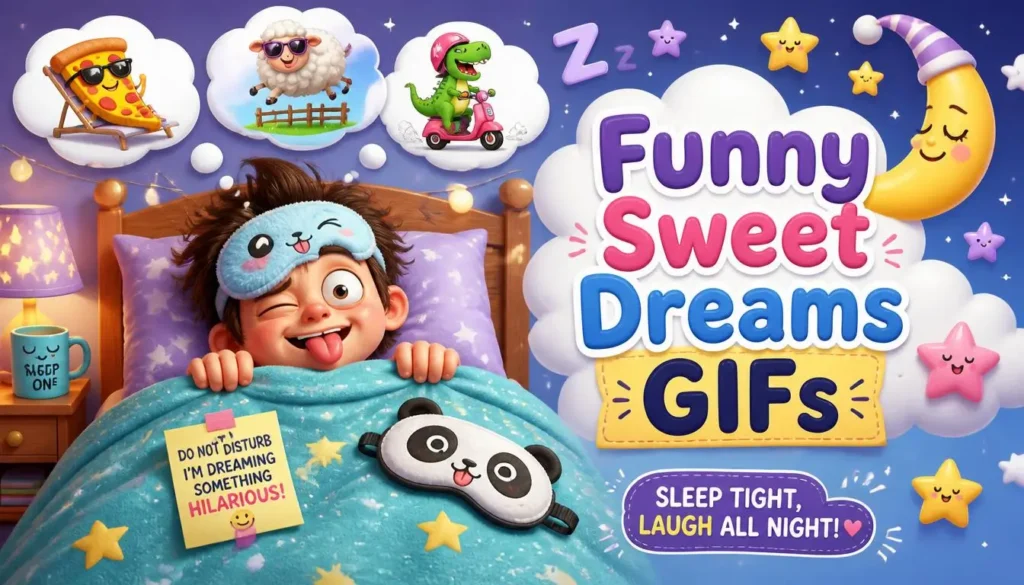
Humor can make bedtime messages more memorable.
Funny GIFs might show someone dramatically falling asleep, struggling to stay awake, snoring, or reacting to the end of a long day.
These work especially well between friends who regularly joke with each other.
For example:
“My brain is officially offline. Good night”
A funny GIF can reinforce the joke without making the message overly sentimental.
Peaceful and Aesthetic GIFs
Some people prefer a calm visual style.
These GIFs may show:
- A moonlit sky
- Stars
- Ocean waves at night
- A quiet forest
- Clouds moving across the moon
- Candles
- Soft lights
- Dreamlike landscapes
They are useful when you want the message to feel peaceful and sincere.
Religious or Spiritual Good-Night GIFs
Some GIFs combine “Good Night” or “Sweet Dreams” with prayer, blessings, angels, Bible verses, or references to God.
These can be appropriate when you know the recipient welcomes that kind of message.
However, it is better to consider the person’s beliefs rather than assuming that every recipient wants a religious message.
How to Choose the Right Sweet Dreams GIF
Choosing a GIF is easier when you think about relationship, tone, and context.
| Recipient | Recommended GIF Style | Tone |
| Romantic partner | Hearts, moon, romantic animation | Loving |
| Spouse | Warm, romantic, personal | Affectionate |
| Best friend | Funny, cute, playful | Friendly |
| Parent | Peaceful or affectionate | Caring |
| Child | Cartoon or animal | Cute |
| Coworker | Simple and neutral | Polite |
| Online friend | Cute or humorous | Casual |
| Family member | Warm or peaceful | Caring |
Match the GIF to the Relationship
This is the most important rule.
A GIF that is perfect for a partner may be inappropriate for a professional contact.
For a coworker, something simple such as a moon-and-stars animation with “Good night” is usually safer than a GIF featuring kisses or romantic hearts.
A close friend, humor may be the better choice.
For someone you love, a personalized romantic GIF may communicate more than a generic animation.
Match the GIF to the Conversation
Think about what you were discussing before saying good night.
If you and a friend were joking, a funny GIF makes sense.
You were having a serious conversation, a calm and supportive GIF may be more appropriate.
If someone had a difficult day, a peaceful “rest well” animation may feel more thoughtful than an overly cheerful cartoon.
The best GIF does not simply match bedtime. It matches the emotional tone of the conversation.
Where to Find Sweet Dreams GIFs
Several online platforms make it easy to search for animated GIFs.
GIPHY
GIPHY has dedicated GIF pages and individual “Sweet Dreams” GIF listings. For example, its search results include animations tagged with phrases such as “sweet dreams,” while individual GIF pages provide information about the animation and its creator.
Try searches such as:
- sweet dreams
- good night
- sweet dreams good night
- good night love
- sleep well
- bedtime
- sweet dreams cute
Tenor
Tenor also organizes GIFs around related tags. Its current good-night search page includes themes such as “good night sweet dreams,” “good night kiss,” “good night love,” “sweet dreams,” and “good-night-sweet-dreams.”
Tenor can be especially useful when you want to browse by mood rather than searching for one exact phrase.
Pinterest and Other Search Platforms
Pinterest can also surface collections and visual ideas related to cute sweet dreams GIFs.
However, when you plan to reuse an animation on a website, advertisement, business account, or other public project, do not assume that finding a GIF online means you automatically have commercial rights to it.
Sweet Dreams GIFs vs. Good Night Images
The terms are related, but they are not identical.
A good night image is usually a static picture. A sweet dreams GIF normally contains animation.
| Feature | Sweet Dreams GIF | Good Night Image |
| Animation | Usually animated | Usually static |
| File format | Often GIF | JPG, PNG, or other format |
| Motion | Yes | No |
| Emotional impact | Dynamic | More traditional |
| Sharing | Messaging and social media | Messaging, posts, cards |
| Best for | Quick reactions and playful messages | Simple greetings |
GIFs can feel more expressive because movement naturally attracts attention.
A twinkling star, blinking heart, waving character, or moving moon can add a small sense of life to an otherwise simple message.
Still, a static image may be better when you want something elegant, printable, or suitable for a greeting card.
The Technology Behind GIFs
The GIF format has been around for decades, long before today’s messaging apps.
When Was the GIF Created?
CompuServe introduced GIF on June 15, 1987. The format was developed to help transmit color images efficiently at a time when computer networks and modem connections were much slower than today’s internet.
Computer scientist Steve Wilhite led the development team responsible for the format at CompuServe.
The format became useful because it could compress images efficiently and support a limited color palette.
When Did Animated GIFs Become Possible?
The original 1987 version was followed by GIF89a in 1989. That version added features that made animated sequences practical, including timing controls between images.
Later browser support helped animated GIFs become a familiar part of the early web. Netscape Navigator 2.0 added support for looping animated GIFs, which helped turn the format into a recognizable form of web animation.
The GIF was therefore not originally designed specifically for memes, reactions, or bedtime greetings. Its modern social use developed much later.
How to Use a Sweet Dreams GIF in a Message
Sending a GIF is simple, but a small amount of personalization can make it much more meaningful.
Add a Short Personal Message
Instead of sending only the GIF, add a few words.
For example:
- “Good night! Hope you sleep well.”
- “Sweet dreams, friend. See you tomorrow!”
- “Rest up, you’ve earned it.”
- “Good night, love”
- “Sleep well and wake up refreshed.”
- “Hope tomorrow is a better day.”
The GIF becomes the visual part of the message, while your words provide context.
Use Emojis Carefully
One or two emojis can complement a sweet dreams GIF.
Common choices include:
🌙 ⭐ 😴 💤 ❤️ 😊
You do not need to fill the message with emojis. One or two usually keep the message clean.
Consider the Time Zone
This sounds obvious, but it matters when communicating across regions.
If you are messaging someone who lives in another country, your bedtime may not be theirs.
A “good night” message sent in the middle of their afternoon may feel odd unless you are intentionally talking about your own bedtime.
Are Sweet Dreams GIFs Copyright-Free?
This is an important distinction.
A GIF’s availability online does not automatically mean that it is free for every type of reuse.
The GIF format itself is a technical file format. That is different from the copyright status of the animation contained inside a particular GIF.
For example, an animated GIF may contain:
- Original artwork
- A movie or television clip
- A celebrity appearance
- A cartoon character
- A brand logo
- User-created animation
- Public-domain material
Each may involve different rights.
Personal Sharing vs. Commercial Use
Sharing a GIF through a messaging platform is different from downloading a GIF and placing it on a commercial website.
If you are publishing a GIF on a business website, using it in advertising, or incorporating it into a product, check the applicable license and rights information.
When possible, use content that you created yourself, or that is clearly licensed for the intended use.
This is especially important for businesses, publishers, and website owners.
What Makes a Sweet Dreams GIF Effective?
A good GIF does not need to be complicated.
In fact, simple animations often work well because the recipient can understand them immediately.
Clear Message
The recipient should quickly understand that the GIF means good night or sweet dreams.
Appropriate Emotion
A romantic GIF should look romantic. A funny GIF should feel playful. A peaceful GIF should create a calm mood.
Readable Text
If the GIF includes words, make sure they are large enough to read on a phone.
Short Visual Loop
A GIF that loops smoothly is usually easier to watch than one with a distracting transition.
Personal Relevance
A GIF that reminds someone of an inside joke or shared interest can be more meaningful than a generic “sweet dreams” animation.
Sweet Dreams GIF Ideas for Different Situations
If you are not sure what to search for, start with the situation rather than the exact phrase.
For Your Partner
Search:
- romantic sweet dreams GIF
- good night love GIF
- sweet dreams kiss GIF
- good night heart GIF
A warm animation with a short personal message often works best.
For a Friend
Search:
- funny sweet dreams GIF
- good night best friend GIF
- sleepy friend GIF
- cute good night GIF
Humor is especially useful if your friendship is playful.
Family
Search:
- good night family GIF
- sweet dreams mom GIF
- sweet dreams dad GIF
- good night sister GIF
- good night brother GIF
Choose something warm without being overly romantic.
For a Child
Search:
- cute good night GIF
- sleepy puppy GIF
- sleepy teddy bear GIF
- good night cartoon GIF
Bright, friendly animations are usually easier for children to enjoy.
For a Professional Contact
Search:
- simple good night GIF
- peaceful night GIF
- good evening GIF
- moon stars GIF
Keep the tone neutral and avoid intimate imagery.
FAQs:
What is a sweet dreams GIF?
A sweet dreams GIF is an animated image used to wish someone a good night, peaceful sleep, or pleasant dreams. It may contain text, characters, animals, stars, moons, hearts, or other nighttime imagery.
Where can I find sweet dreams GIFs?
You can find sweet dreams GIFs on platforms such as GIPHY and Tenor. Both provide searchable collections of GIFs related to good night, sweet dreams, sleep, love, and bedtime.
What should I write with a sweet dreams GIF?
Keep the message short and personal. Examples include “Sleep well,” “Hope you have sweet dreams,” “Good night, friend,” or “Good night, love.” The right wording depends on your relationship with the recipient.
Is a sweet dreams GIF romantic?
Not necessarily. Sweet dreams GIFs can be romantic, friendly, funny, cute, spiritual, or completely neutral. The animation, wording, and relationship between the sender and recipient determine the tone.
Can I use a sweet dreams GIF on my website?
That depends on the specific GIF and its rights. The fact that a GIF appears on a public GIF platform does not automatically grant permission for commercial reuse. Check the creator, license, and applicable usage terms before publishing it commercially.
Conclusion:
A sweet dreams GIF is a small piece of digital communication, but it can say much more than the words “good night.” A cute animation can make a friend smile, a romantic GIF can add warmth to a partner’s evening, and a peaceful moon-and-stars animation can create a calm ending to someone’s day.
The key is choosing the right GIF for the person and the moment. Think about your relationship, the tone of your conversation, and the emotion you want to communicate.
A funny animation may be perfect for a close friend, while a simple nighttime scene may be better for a coworker.
GIFs also have a surprisingly long history. The format began with CompuServe in 1987 as a practical way to exchange images over early computer networks.
Later developments made animation possible, and GIFs eventually became a major part of online visual communication.
Whether you want something cute, romantic, funny, peaceful, or simple, the best sweet dreams GIF is one that feels natural for the person receiving it.
Read More Posts:
- Good Night Sweet Dreams: Romance, and Sweet Messages 2026
- Sweet Dreams Lyrics: History, Meaning, and Analysis
- California Dreams: History, Meaning, and Cultural Significance

Michael Turner writes insightful articles for WorldofDreamsz.Com focusing on biblical meanings, dreams, and spiritual awareness. His goal is to inspire readers to explore deeper truths and strengthen their faith.